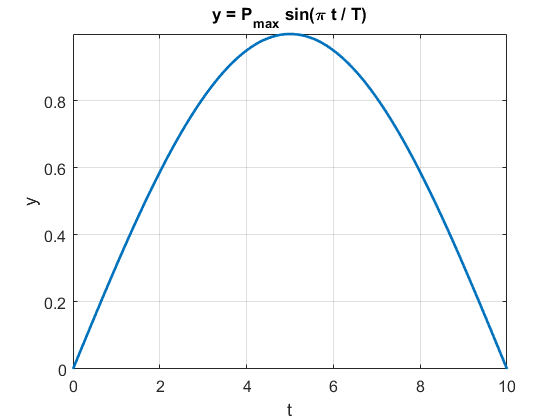
While real solar production depends on weather, temperature, and system orientation, this simplified curve captures the basic daily behavior of a solar array.
The role of the inverter
Solar panels generate direct current (DC) electricity. Homes and the electrical grid operate on alternating current (AC). The inverter converts the DC electricity produced by the panels into a usable AC power.
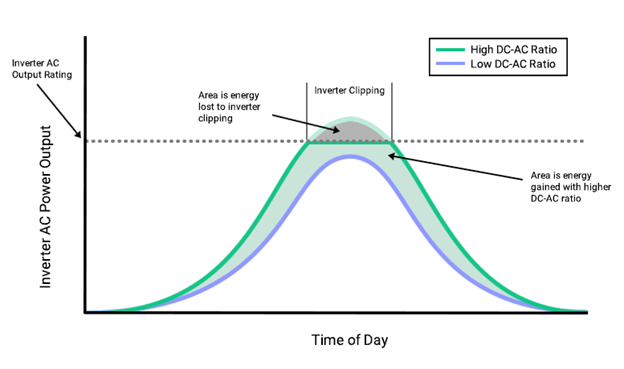
Every inverter has a maximum AC output rating. When the solar array attempts to produce more power than the inverter can convert, the inverter limits its output to its rated capacity.
When this occurs, the top of the production curve becomes flat rather than rounded. This effect is known as inverter clipping.
Clipping can sound like wasted energy, but it is an engineering trade off.
Solar panels are relatively inexpensive compared to inverters and installation labor. Adding a few extra panels can significantly increase energy production during the parts of the day when sunlight is weaker.
Because these conditions occur far more often than perfect midday sunlight, adding extra panels often increases total yearly production.
DC-AC Ratio
To take advantage of this, many solar systems are designed with a DC-to-AC ratio greater than 1. This means the total rated capacity of the panels exceeds the AC capacity of the inverter.
During the brightest hours of the year, the inverter may reach its output limit and clip the peak of the production curve. For the rest of the day, however, the additional panel capacity increases energy production.
Maximizing total energy
For solar designers, the goal is not to maximize the peak power of the system for a single moment of the day. The goal is to maximize the total energy produced over time.
A slightly oversized solar array may clip the very top of the curve for short periods, but it often widens the curve during the morning and afternoon hours.
This results in greater total energy generation over the course of the day and throughout the year.
A design decision that balances equipment cost, system performance, and long-term energy production.