
How Home Batteries Can Save You Money
Home batteries are often sold as a backup-power solution. When the grid goes down, a battery can keep essential parts of your home operating without the noise, fuel, and maintenance associated with a traditional generator. That alone can make battery storage attractive, but backup power is only one reason homeowners are adding batteries to their solar systems.
A battery also gives you greater control over when you buy electricity from the grid and when you use the electricity produced by your solar panels. As utilities introduce time-of-use rates, change compensation for exported solar energy, and look for ways to reduce demand during peak hours, that flexibility can have real financial value.
The important question is no longer simply how much electricity your solar panels produce. Increasingly, it is also when that electricity is produced, stored, exported, and consumed.
Buy Less Electricity When It Is Expensive
Not every kilowatt-hour of electricity necessarily costs the same amount.
Under a time-of-use rate, electricity prices vary depending on when electricity is consumed. Electricity may be relatively inexpensive during periods of low demand and more expensive during peak periods, often in the late afternoon and evening.
Electric utilities have to continuously balance electricity supply and demand. Solar generation can produce enormous amounts of electricity during the middle of the day, but solar production begins declining in the afternoon just as many homes and businesses are entering periods of higher electricity consumption.
This phenomenon contributes to what energy planners call the duck curve: relatively low demand for grid-supplied electricity during periods of high solar production followed by a steep increase as solar generation disappears in the evening.
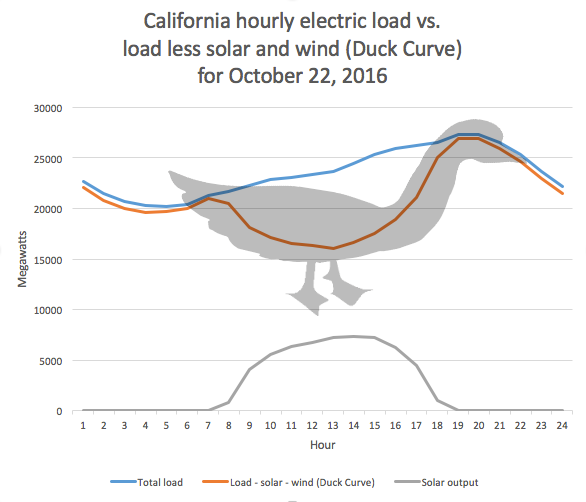
For a homeowner on the right rate structure, a battery can take advantage of this difference.
The battery can charge when electricity is inexpensive or when excess solar energy is available and discharge when grid electricity becomes more expensive. Instead of purchasing electricity during the highest-priced hours, the home can temporarily operate using stored energy.
The battery is not necessarily reducing how much electricity the household consumes. It is changing when the household needs to purchase that electricity from the utility.
Your Battery Can Automatically Manage Energy Costs
Modern home batteries are much more sophisticated than simply charging when the sun is shining and turning on when the power goes out.
Many systems can be configured around a homeowner’s electricity rate schedule. The battery knows when electricity prices change and can adjust when it charges and discharges accordingly.
For example, a system might prioritize charging from excess solar production during the afternoon. As a utility’s peak-rate period begins, the battery can start supplying the home. Once electricity prices fall later in the evening, the system can return to normal operation.
This process can happen automatically every day without the homeowner manually controlling the battery.
The result is something that would have been difficult for a typical homeowner to accomplish only a few years ago: actively managing when the house interacts with the electric grid based on the cost of electricity.
A Battery Can Change the Economics of Solar
For many years, residential solar economics were relatively straightforward. A solar system generated electricity, the homeowner consumed some of it, and excess production was exported to the grid.
Strong net-metering policies made the grid function almost like an enormous virtual battery. A homeowner could export excess solar electricity during the afternoon and receive credits that helped offset electricity purchased later.
As compensation structures evolve, however, the value of self-consumption becomes increasingly important.
Suppose your solar system produces one kilowatt-hour of excess electricity. If exporting that electricity earns less than the cost of purchasing one kilowatt-hour later that evening, you may be financially better off storing the electricity and consuming it yourself.
The greater the difference between the value of exported electricity and the cost of electricity purchased from the grid, the more valuable energy storage can become.
This is one reason batteries and solar are increasingly being considered together rather than as completely separate technologies.
Virtual Power Plants Can Create Another Source of Value
Some utilities and energy providers are also experimenting with programs that compensate homeowners for allowing their batteries to support the grid during periods of unusually high electricity demand.
These programs are commonly called Virtual Power Plants, or VPPs.
A single residential battery is relatively small compared with a utility power plant. Thousands of batteries coordinated together, however, can represent a substantial energy resource.
During a period of high electricity demand, participating batteries may discharge a portion of their stored electricity. Collectively, those homes reduce demand on the grid or supply electricity when it is particularly valuable.
Depending on the program, homeowners may receive financial compensation for participating.
Availability, compensation, battery requirements, and operating rules vary considerably between programs, so VPP revenue should not automatically be assumed when evaluating the economics of a battery. Nevertheless, these programs demonstrate an important shift in how residential batteries are being viewed.
Your battery isn’t necessarily just equipment sitting on the wall waiting for an outage. Under the right circumstances, it can become an active energy asset.
Backup Power Has Financial Value Too
Not every benefit from a battery appears directly as a credit on your electricity bill.
Power outages can have financial consequences. Refrigerated and frozen food can spoil. Someone working from home may lose productive hours. Medical or communications equipment may require continuous electricity. Longer outages can even require homeowners to temporarily relocate.
The value of avoiding those disruptions is difficult to express as a simple return on investment because it depends heavily on the homeowner and the frequency and duration of outages in their area.
A traditional backup generator can also provide outage protection, but generators introduce their own costs, including equipment, installation, fuel, maintenance, and eventual replacement. A solar battery can provide backup power while simultaneously performing energy-management functions throughout the rest of the year.