Save $0.25 per watt on solar installs for a limited time
Menu
Oregon Electricity Prices are Likely to Keep Rising
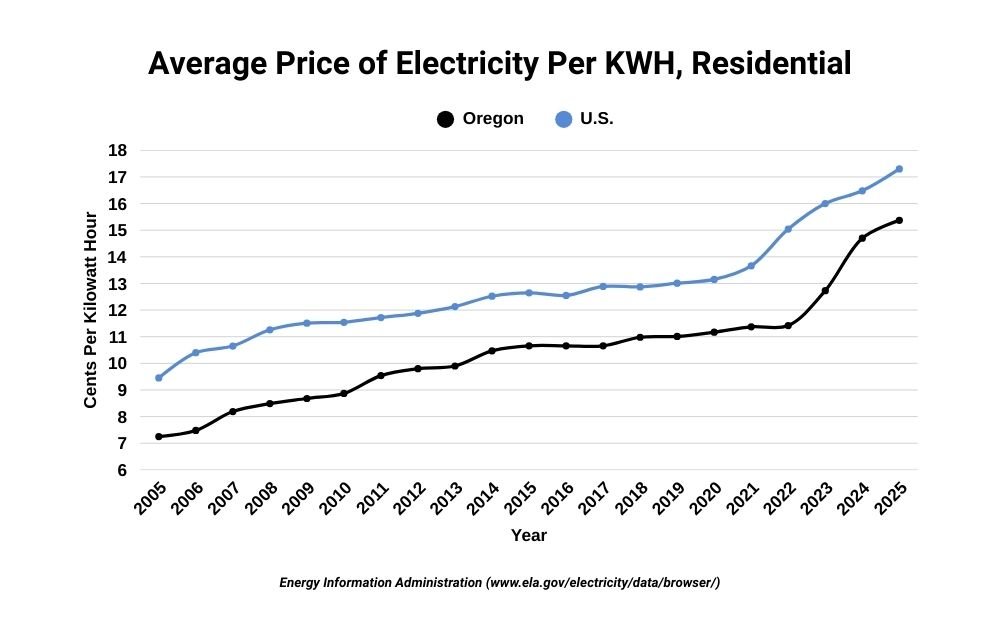
Electricity prices in both Oregon and across the United States have been climbing steadily for years, but something noticeable happened around 2022. After more than a decade of relatively slow increases, power prices began rising much faster.
According to data from the U.S. Energy Information Administration, the average residential electricity price in Oregon has increased sharply since 2022, following a similar trend seen nationally.
What are the electric utility companies saying?
Rising Energy Supply Costs
After the pandemic, energy demand rebounded quickly while global fuel markets became unstable. Natural gas prices surged during this period, especially after the Russia-Ukraine conflict disrupted global energy markets.
Because natural gas still plays a major role in electricity generation in the United States, higher fuel prices translated directly into higher electricity costs for utilities.
Even though fuel prices have stabilized somewhat since then, utilities often lock in energy purchases months or years in advance, which means those higher costs continue to show up in customer rates.
Massive Investment in the Electric Grid
Much of the U.S. power grid was built decades ago, and utilities across the country are now investing heavily to modernize it.
Utilities say rate increases help fund infrastructure improvements such as:
replacing aging transmission lines
upgrading local distribution systems
installing new grid automation technology
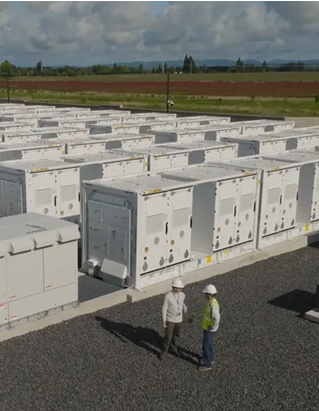
expanding battery storage
preparing the grid for renewable energy and electric vehicles
These investments are typically approved by state regulators and recovered through customer electricity rates.
Source: PGE (475MW Battery Storage)
Wildfire Prevention and Climate Resilience
In western states like Oregon, utilities have been increasing spending on wildfire prevention programs.
These efforts can include vegetation management, stronger poles and lines, undergrounding power lines, and advanced monitoring systems designed to detect fire risks early.
While these programs improve safety and reliability, they also add significant costs that are passed on to ratepayers.
Electricity demand is beginning to grow again after years of slow growth.
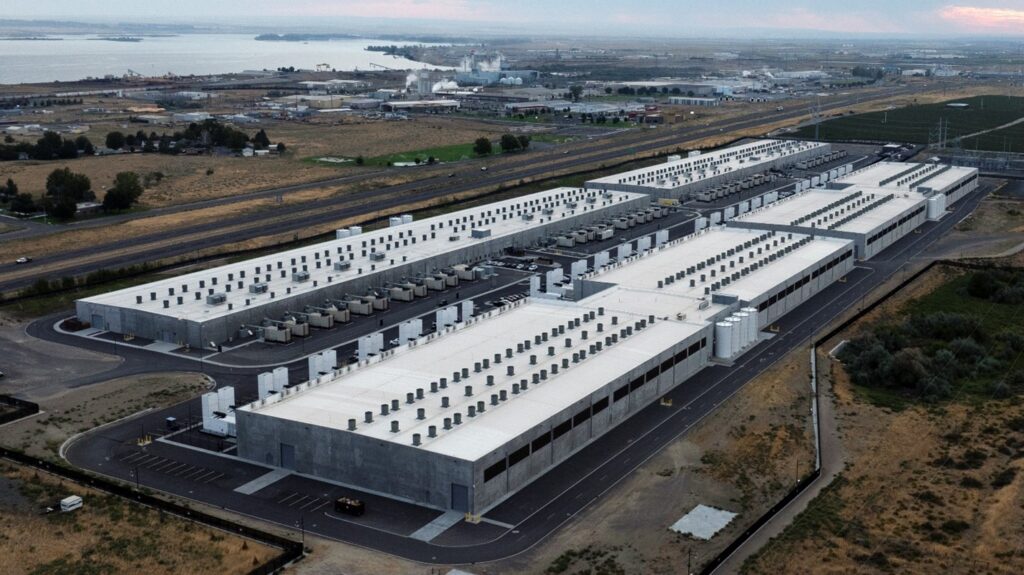
New loads such as electric vehicles, heat pumps, and large data centers require utilities to expand both generation and transmission capacity. Building new infrastructure to meet this demand is another factor contributing to rising electricity rates.
What this means for homeowners
PGE customers saw electricity rates increase roughly 18% in 2024. Pacific Power customers experienced similar changes, with rate increases totaling over 20% as utilities recover the cost of infrastructure upgrades, wildfire mitigation, and high fuel expenses.
For homeowners, this trend is an important reminder that the long-term cost of electricity is unlikely to stay flat. As utility prices rise, more people are looking for ways to gain control over their energy costs. One of the most effective ways to do that is by installing solar. By generating electricity on-site, solar can reduce dependence on the utility grid and help stabilize energy costs over the long term. Because modern solar systems are designed to produce energy for 30 years or more, they can provide a level of cost predictability that traditional electricity rates cannot.