
Solar on a Standing-Seam Metal Roof in Milwaukie
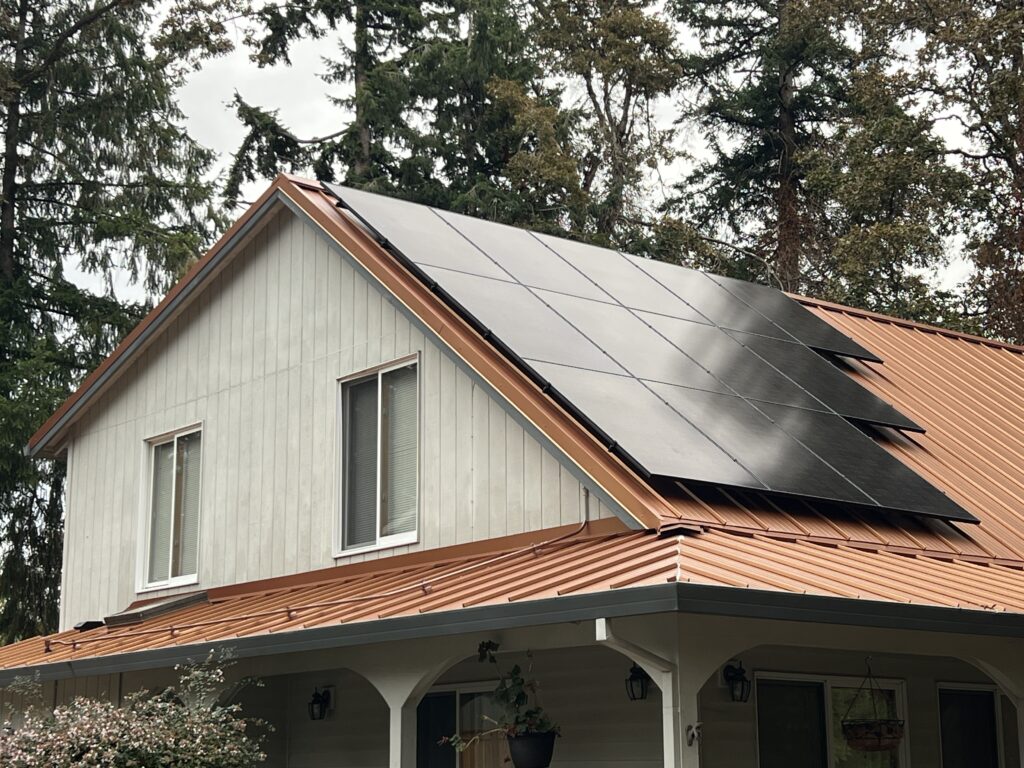
A standing-seam metal roof offers a particularly useful advantage for solar: the panels can be mounted without drilling through the roofing. For this Milwaukie home, Cascade Solar’s design pairs a 12-panel solar array with FranklinWH battery backup and a planned connection to the home’s existing generator port.
The 4.74-kilowatt DC array follows the home’s south-facing roof slope, creating an orderly layout that complements the roofline while leaving the metal roofing visible around its edges. Behind those panels is the hardware that makes this installation a good fit for a standing-seam roof.
Secure Solar Mounting Without Roof Penetrations
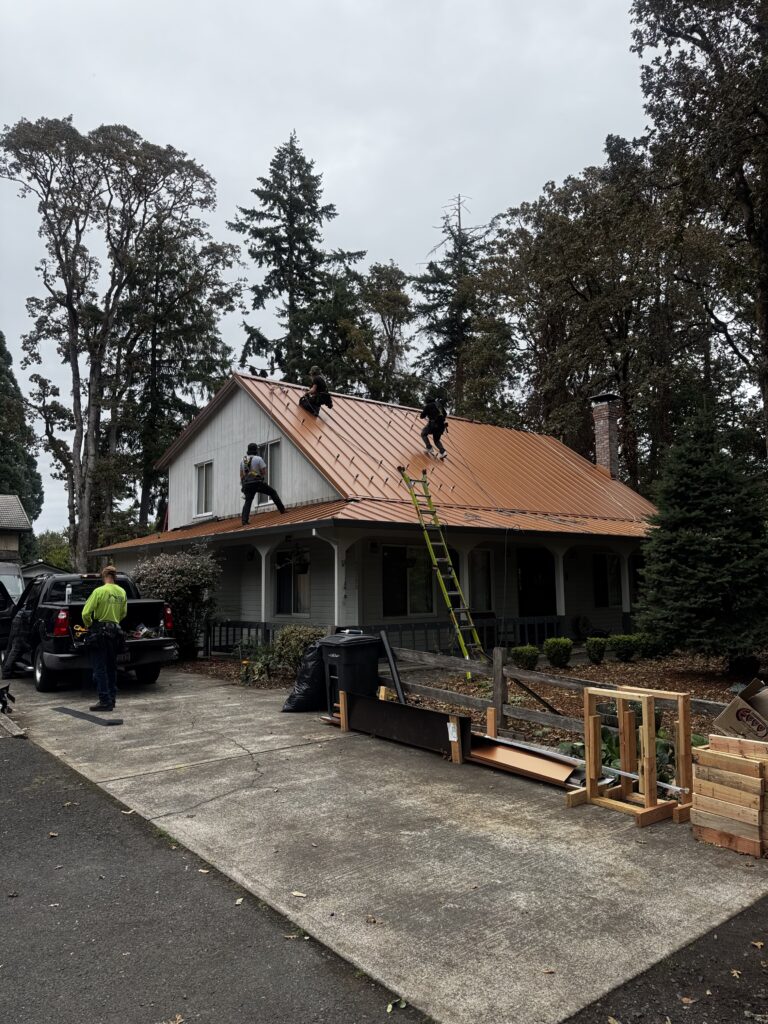
For this project, we use S-5! attachments that clamp onto the roof’s raised seams with set screws. These clamps provide mounting points without drilling holes through the metal roof panels. It’s a practical benefit of standing-seam roofing: the seams themselves provide a place to attach compatible solar mounting hardware.
The S-5! attachments work with the project’s IronRidge XR10 racking to support the array. Choosing the right attachment starts with the roof’s specific seam profile, so the mounting system is selected to suit the roof already on the home.
Solar Production and Monitoring
The electrical design pairs the 12 solar panels with 12 Enphase microinverters, which convert the panels’ electricity into alternating current for household use. Enphase Enlighten monitoring lets the homeowner follow system performance once the installation is operating.
The array’s estimated annual production is 4,152 kilowatt-hours. That projection helps put the system’s size in context, although actual production will vary with sunlight, shading, weather and other site conditions. Comparing expected solar production with the household’s electricity use helps us develop a system that fits the property and the homeowner’s needs.
Battery Backup and Generator Integration
The planned backup system includes one FranklinWH aPower2 battery and an aGateX controller, along with a generator module and a connection to the home’s existing generator port. This brings battery storage and generator integration into the project’s electrical design from the start.
Planning backup power begins with understanding what the homeowner wants to keep running during an outage. Refrigeration, lighting and internet equipment have different demands than larger appliances, and those choices affect both system configuration and battery runtime. Designing around those priorities helps establish clear expectations for how the backup system will serve the home.
Considering Solar for Your Metal Roof?
Have a metal roof and questions about solar? Contact Cascade Solar to explore a system designed around your roof, your electricity use and your backup power goals.